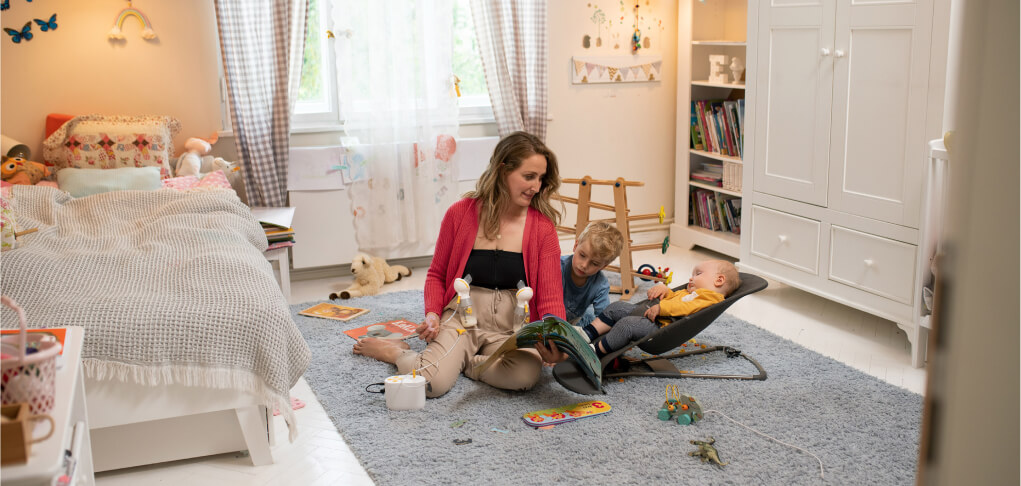
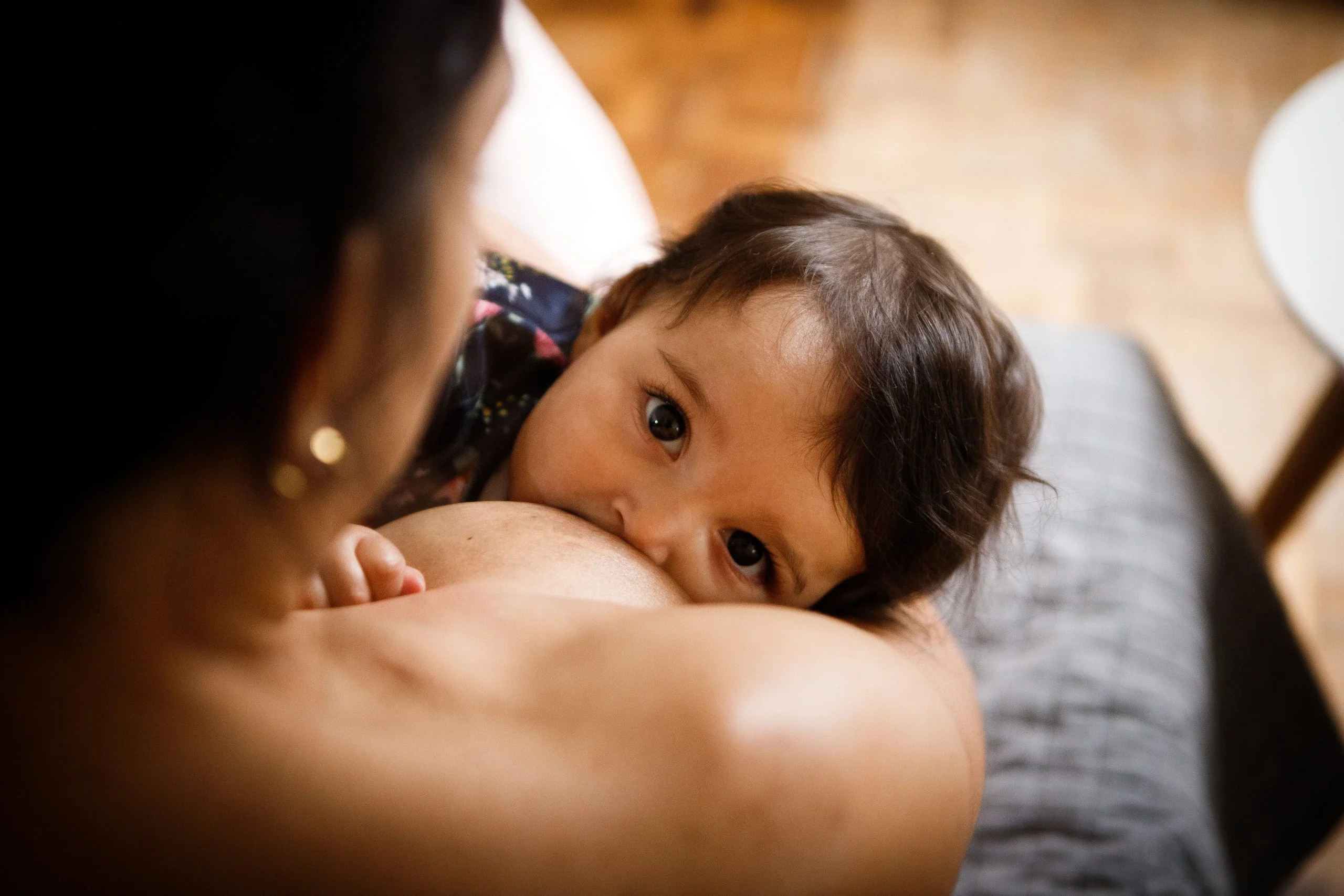
After nine months without a period, you may be wondering when your menstrual cycle will come back, especially if you are breastfeeding. The short answer: breastfeeding usually delays it, sometimes for many months, and when it does return it can change your milk supply for a few days. Here is when to expect your period after birth, what menstruation does to breastfeeding and pumping, and what to know about getting pregnant before your first period.
Does breastfeeding affect your period?
Yes. While you breastfeed, your body makes more prolactin, the hormone behind milk production. Prolactin keeps your estrogen and progesterone low and stops your ovaries from releasing an egg. No ovulation means no period. Every time your baby nurses, prolactin rises again, which is why frequent nursing, day and night, keeps your period away the longest.
How long that lasts varies a lot from mom to mom. La Leche League sums it up this way: the more often your baby breastfeeds, the younger your baby is, and the less your baby gets from other foods or formula, the later your period will come back.
It works the other way too: your period can affect breastfeeding. More on that below, in how your period affects breastfeeding.
When does your period come back after birth?
When your first period after birth arrives depends mostly on how you feed your baby. These are typical ranges, not deadlines. Your own timing can be earlier or later and still be normal.
| How you feed | When your period usually returns |
|---|---|
| Not breastfeeding (formula only) | 1 to 3 months after birth, often around 6 to 8 weeks |
| Breastfeeding plus formula or solids | Somewhere in between, often once feeds get further apart |
| Exclusively breastfeeding, day and night | Usually 3 to 6 months or longer; many moms get it back between 9 and 18 months |
| Exclusively pumping | Pumping delays it too; longer gaps between sessions make an earlier return more likely |
Lochia is not your period
The bleeding right after birth is called lochia. It is your body shedding the blood and tissue that supported your pregnancy, and it looks a lot like a heavy period at first. It is bright or dark red for the first 3 to 4 days, turns pinkish brown and thinner over the next week or so, then becomes yellowish white with little or no blood. Lochia usually lasts up to about 6 weeks, sometimes a little longer.
Your uterus also cramps as it shrinks back to its usual size. These cramps can feel like your cycle is starting, and they are often stronger while you breastfeed or pump, but they are part of healing, not a period. Lochia slowly tapers off. Bleeding that fully stops and then starts again as bright red may be your first period, or a sign to call your provider.
After a c-section
A c-section does not put your period on its own schedule. What decides the timing is mostly whether and how often you breastfeed. You will still have lochia after a c-section, usually a bit less than after a vaginal birth, and you should still wait for your doctor’s OK at your postpartum checkup before using tampons or a menstrual cup.
Can you get your period while breastfeeding?
Yes. Lots of moms get their period while breastfeeding, and it does not mean anything is wrong with your milk or that you need to wean. Some moms menstruate within a couple of months of birth even while nursing often. Others do not have a period until their baby is weaned. Both are normal.
Your period is more likely to come back when:
- Your baby sleeps longer stretches at night, or you drop a night feed
- Your baby starts solids, usually around 6 months
- You add formula or your baby uses a pacifier more and nurses less
- You go back to work and pump fewer times than your baby used to nurse
- Your baby is past 6 months old
A first bleed while breastfeeding is not always a sign that your cycle is fully back. La Leche League notes that some moms have a period without ovulating before 6 months, then no period again for months.
No period while breastfeeding?
Going many months without menstruating while breastfeeding is common and normal. This is called lactational amenorrhea. Your period usually returns on its own as feeds space out, and weaning almost always brings it back, though most moms do not need to wean for their cycle to return.
Two times to check in with your doctor: if your period came back and then stopped again (take a pregnancy test first), or if your period has not returned a few months after you stop breastfeeding.
Does pumping delay your period?
Yes, pumping can delay your period too. Removing milk keeps prolactin up whether your baby nurses or you pump, and Cleveland Clinic notes that the more you breastfeed or pump, the longer you are likely to go without a period.
A pump is not quite the same signal as a baby, though. Babies nurse in short, frequent bursts, often through the night, while pumping sessions tend to be spaced further apart and many moms drop the night pump early. Longer gaps between milk removal make ovulation more likely, so moms who exclusively pump may see their period come back sooner than moms who nurse around the clock.
Pumping also changes the birth control math. Planned Parenthood says breastfeeding as birth control does not work if you use a breast pump, and ACOG says it is unclear how much pumping lowers its protection. If you are pumping, use another method if you do not want to get pregnant.
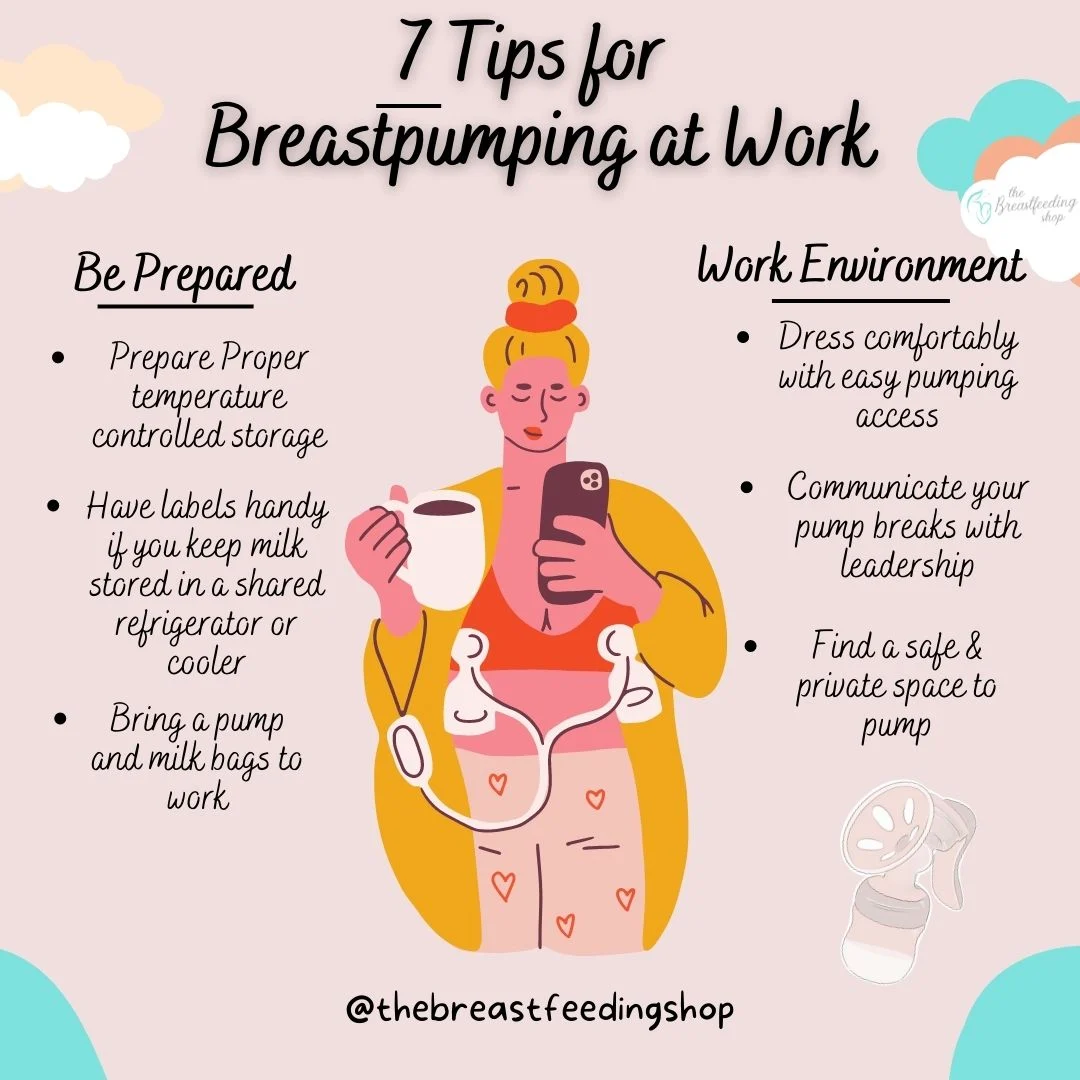
If you are pumping at work, keeping your sessions close to your baby’s feeding schedule protects both your supply and the hormone signal. Our tips for breastfeeding at work include a sample pumping schedule.
How your period affects breastfeeding
Breastfeeding while on your period is safe for you and your baby. There is no need to stop nursing, and no need to throw out pumped milk. But the same hormone shifts that bring your period back can change how breastfeeding feels for a few days.
A dip in milk supply
Many moms notice a drop in supply at certain points in the cycle, most often from the middle of the cycle (around ovulation) to the first days of the period. You might pump a little less or notice your baby wants to nurse more often. The dip is temporary and your supply usually bounces back once your period starts or ends.
Fussy feeds and milk taste
Some babies fuss, nurse for shorter stretches, or pull off the breast around their mom’s period. One reason may be taste: a 1987 study of nursing moms found that around ovulation, sodium and chloride in breast milk rose for a few days while lactose and glucose fell, which can make milk a little saltier and less sweet. Your milk is still full of nutrition and antibodies. Most babies go back to their usual pattern within a few days.
Sore nipples and tender breasts
Nursing can feel less comfortable around your period, with tender breasts or sore nipples. A good latch, switching positions, and warm compresses help. If nursing feels too sore for a feed or two, you can pump and give that milk in a bottle instead.
How to keep your supply steady during your period
- Nurse or pump more often during the dip. Extra milk removal is the most direct way to tell your body to make more.
- Add a short pumping session after a morning feed, when supply tends to be highest.
- Drink to thirst and eat enough. Breastfeeding takes extra calories and fluids.
- Ask about calcium and magnesium. La Leche League shares a suggestion from its book The Womanly Art of Breastfeeding: 500 to 1,000 mg a day of a calcium and magnesium supplement from the middle of your cycle through the first three days of your period may help soften the dip. It has not been well studied, so check with your doctor before you start any supplement.
- Get help if the dip lingers. Our lactation consultants can help you make a plan to protect your supply and fix a sore latch.
Your first periods after birth: heavy, light, or irregular
Your first period after having a baby may not look like the periods you had before. It may be heavier or lighter, longer or shorter, more painful or less painful. Cleveland Clinic explains that the uterus is slightly larger after birth, so more lining can shed, which is why some moms have a heavy period after birth. Others find their periods are easier than before.
An irregular period while breastfeeding is very common too. Because breastfeeding keeps estrogen low, your cycle may skip a month, come early, or change length from one month to the next. The first few cycles are often erratic, and most settle into a predictable pattern after several months, sometimes after weaning.
About pads, tampons and cups: use pads only while you have lochia, and wait at least 6 weeks, or until your provider says it is OK, before using tampons or a menstrual cup. After that, any period product is fine while breastfeeding.
Jot down when your period starts and when your supply dips. After a cycle or two the pattern is easier to plan around. If you build a freezer stash, our guide to storing breast milk has the safe storage times.
Can you get pregnant while breastfeeding before your first period?
Yes. You ovulate about two weeks before a period starts, so you can release an egg and get pregnant before your first period ever shows up. If you are not breastfeeding, ovulation can return within a few weeks of birth, and the NHS notes you can get pregnant as early as 3 weeks after birth. If you are breastfeeding, ovulation is usually delayed, but ACOG says it usually returns by about 6 months.
Breastfeeding as birth control (LAM)
The lactational amenorrhea method, or LAM, uses breastfeeding to prevent pregnancy. It works well only when all three of these are true:
- Your period has not come back (the NHS counts even light spotting)
- You are fully or nearly fully breastfeeding, with no more than 4 hours between feeds during the day and 6 hours at night
- Your baby is under 6 months old
Used this way, Planned Parenthood says about 2 in 100 women get pregnant in those first 6 months. Once any one rule stops being true, LAM no longer protects you. That includes starting solids, giving formula, longer night stretches, or relying on a pump.
Birth control and your milk supply
Many methods are fine while breastfeeding, and some can start right after birth, including progestin-only pills, the implant, the shot, IUDs, and condoms. Combined pills, the patch, and the ring contain estrogen, which ACOG says carries a very small risk of lowering milk supply. ACOG suggests waiting 4 to 6 weeks after birth, until breastfeeding is established, before starting them. Talk with your provider about which option fits you, ideally before your baby arrives.
Questions moms ask about breastfeeding and periods
Does breastfeeding stop periods?
Often, for a while. Frequent breastfeeding keeps prolactin high, which holds back ovulation, so many moms who breastfeed around the clock have no period for 3 to 6 months or longer. It is a pause, not a stop: your period comes back as feeds space out or when you wean.
Is my breast milk still good when I’m on my period?
Yes. Menstruation does not make your milk unsafe or less nourishing. The taste may change slightly for a few days, and your supply may dip, but you can keep nursing and feeding pumped milk as usual.
Can my period make my baby fussy?
It can, for a few days. Some babies nurse less or fuss at the breast around their mom’s period, possibly because milk tastes a bit saltier or flows a little slower during the dip. It passes on its own. Offer the breast more often and keep feeds calm.
Why is my period irregular while breastfeeding?
Breastfeeding keeps estrogen low, and your cycle is still finding its rhythm after birth. Skipped, early, or uneven periods are common until feeds space out or you wean. Check with your doctor if bleeding is very heavy or if a missed period could mean pregnancy.
When do you get your period after birth if you’re pumping?
Usually later than if you were formula feeding, but often sooner than with round-the-clock nursing. Pumping keeps prolactin up, yet sessions are usually spaced further apart than a baby’s feeds, which gives ovulation more room to return.
Can I use tampons or a menstrual cup while breastfeeding?
Yes, once lochia has stopped and your provider gives the OK, usually at least 6 weeks after birth. Breastfeeding itself does not limit which period products you use.
Does getting my period mean I should stop breastfeeding?
No. Your period returning is not a reason to wean. Most moms keep breastfeeding through many cycles. If your supply dips, a few extra nursing or pumping sessions usually bring it back.
Sources
- La Leche League International: Menstruation and breastfeeding
- Cleveland Clinic: Do your periods change after having a baby?
- Cleveland Clinic: Lochia (postpartum bleeding)
- American College of Obstetricians and Gynecologists (ACOG): Postpartum birth control
- CDC: Lactational amenorrhea method
- Planned Parenthood: Breastfeeding as birth control
- NHS: Sex and contraception after birth
- March of Dimes: Your body after baby, the first 6 weeks
- Hartmann, Journal of Reproductive Medicine (1987): Lactation and reproduction in Western Australian women